

I Turned 50. Here's What I'm Choosing to Carry Forward.


I turned 50 this year.
I want to sit with that number for a moment, because I don't take it lightly. My father died of prostate cancer in his early fifties. I was still a teenager. For most of my life, the age I'm standing in right now was the age when my father's story ended.
So when people ask me how it feels to be 50, the honest answer is this: it feels like a gift I never assumed I would get. Healthy. Present. Still here. So many people never get to say that, for reasons that have nothing to do with how hard they tried. That alone is reason to celebrate.
But this birthday also asked me a harder question than any birthday before it. Not What do I want? but Who do I want to be remembered as, and how much am I willing to work to become him?
The Birthday I Asked For
Most years, my birthday has been an excuse to treat myself. Samira and I would set money aside for months so we could go somewhere really nice, even if the trip didn't land on the exact date. It was my once-a-year reminder that I was allowed to enjoy the life I was working so hard to build.
This year, I had one ask. Not a destination. Not a gift. Just time with my family, kept simple.
We went to an all-inclusive family resort, the kind of place built around kids. There were activities everywhere, and a supervised playtime where we could drop the kids off for a few hours. The kids had an absolute blast. And for the first time in a long time, Samira and I had unhurried time with just the two of us.
Nothing about it was extravagant. There was no big party and no grand gesture. But I found myself in a space where I could actually reflect. I watched my kids laugh. I sat next to my wife without a laptop between us. And I kept thanking God, quietly, over and over, for letting me reach this age and celebrate it with the people who love me, and whom I love every single day.
It was one of the most beautiful birthdays I've ever had. And it confirmed something that had been brewing in me for a while.
The Weight of the Things We Keep
For a while now, I've been trying to live a simpler life. Not in a trendy, minimalist-apartment way. In a day-to-day way. Consuming less. Wanting less. Paying attention to what actually fills me up.
Turning 50 made me look around at everything I've accumulated over five decades. The gadgets. The clothes. The things I had to have at the time. And when I honestly measured their value, I came up nearly empty.
Here's what's strange about it: in the moment, those purchases felt important. There was a real rush of gratification when I bought them. But looking back, I can barely remember most of them. They didn't change me. They didn't hold me up when things got hard.
What I do remember are the experiences. The trips. The late-night conversations. The ordinary afternoons with people I love. Those are the things that turned out to be valuable, and most of them cost almost nothing.
It rarely feels that way in the moment. That's the trap. The things that matter most often look small while you're living them, and the things that matter least often feel urgent. It takes distance, sometimes fifty years of it, to see the difference clearly.
A Quiet Man in a Loud World
A few weeks after my birthday, I went to see a film my friend Bassam Tariq wrote and directed. It's called Your Mother Your Mother Your Mother, and Mahershala Ali plays the lead, a man named Latif.
I won't give much away, because you should see it for yourself. The setup is simple: Latif is a Muslim father in Houston whose wife has just passed, and he is desperately searching for breast milk for his infant daughter. He also happens to do very dangerous work. It's beautifully shot, beautifully written, and it stayed with me.
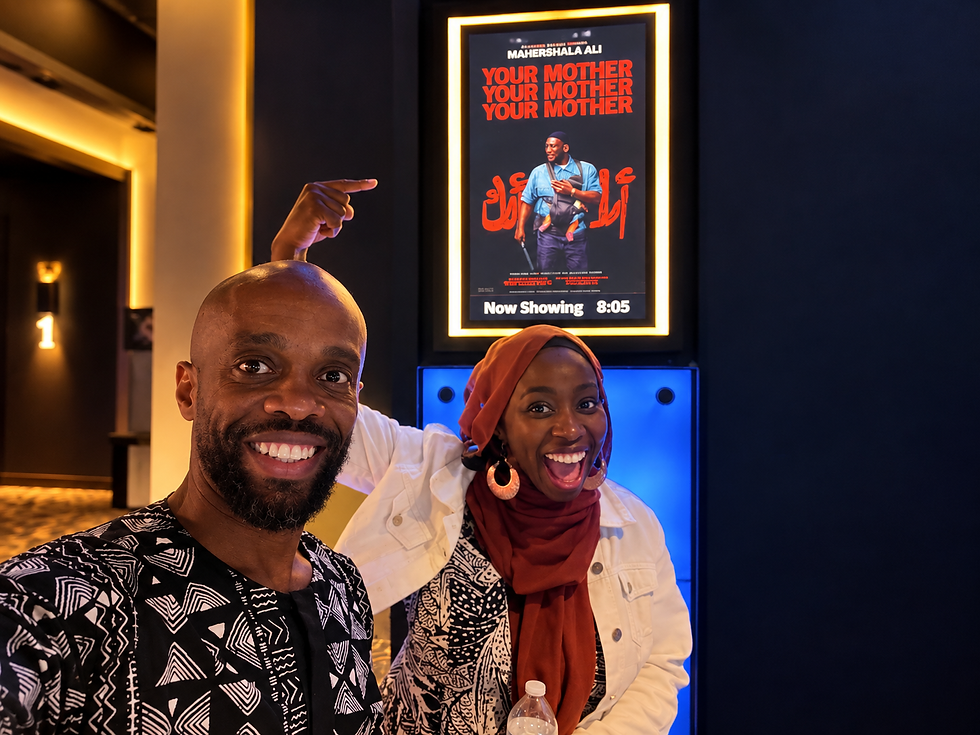
What stayed with me most wasn't the action, even though the action and martial arts were amazing! It was how simple Latif's life is. His car is plain. His home is modest. Nothing about him is flashy, and you get the sense that this is a choice. He could live louder. He doesn't.
Part of that is about staying under the radar. But I saw something else in it too. Latif is a man trying to hold everything together for his children while carrying grief he hasn't let himself feel. He's trying to fill shoes that are much bigger than his own. And over the course of the film, everything strips away until he's forced to face what truly matters.
The title comes from a well-known saying of the Prophet Muhammad (peace be upon him). A man asks who is most deserving of his good companionship. The answer: your mother. Then who? Your mother. Then who? Your mother. And only then: your father.
I've been thinking about that fourth place a lot. About what it takes for a father to earn it.
The Promise I Made, and Kept Breaking
I don't remember my father ever hugging me. I don't remember him ever telling me he loved me. He owned several businesses and worked constantly. What I remember from our time together is fear. Punishments. Belts. Feeling invisible in my own home.
When he was dying, I didn't sit by his bed. I stayed in the next room, still waiting for a love I felt he never gave me. At his funeral, surrounded by people in tears, I couldn't find it in my heart to fully mourn him.
It took a long time for the grief to finally reach me. When it did, I cried from morning until sunset. That evening, my mother told me something I've carried ever since: everyone expresses love differently, some ways are healthier than others, and sometimes parents repeat what they learned from their own struggles. That doesn't mean they didn't love you.
So I made myself a promise. I would be a different kind of father.
Here's the part that's hard to admit. Saying I'd be different didn't make me different. There were moments, more than I'd like, when I caught myself being the very same version of my father to my own kids. The sharp tone. The flash of anger. The storm.
What I've learned is that a promise like that doesn't come true on its own. It takes work. Every single day. It shows up in how I speak when I'm tired, and in whether I stay calm when everything inside me wants to erupt. Some days I quiet that storm. Some days I don't, and I have to go back and repair.
And at 50, with more understanding than I had as a teenager, I'm fairly sure my father was fighting a storm of his own. He just never had the tools, or the permission, to name it.
In my twenties, while I was trying to become someone worth marrying, I asked myself a question that changed my life: Who do I need to be to meet the person I'm looking for? At 50, the question has shifted. Now it's this: Who do I need to be for the people who are already here?
What This Has to Do With the Way We Lead
You might be wondering what a birthday trip, a film, and my father have to do with workplace culture. The truth is, everything.
Organizations accumulate, too. Over the years, teams pile up initiatives, tools, committees, recurring meetings, and policies. Each one felt urgent when it was added. Each one came with its own rush of "we're finally doing something." But step back and ask what truly changed people's experience of work, and the list gets very short. Usually it's not the programs. It's the moments people felt seen, trusted, and supported by the humans around them.
Leaders inherit patterns, too. Most of us lead the way we were led. We swore we would never become that manager, the one who micromanaged us, went silent when we needed feedback, or exploded under pressure. And then one stressful quarter, we hear their words coming out of our mouths. I've written before about how "The Cycle of Harm: Why “We’ve Always Done It This Way“ Is Slowly Killing Your Culture" quietly keeps harm in place. This is how it happens. Not through bad intentions, but through good intentions without daily practice.
And everyone is carrying a storm. The director who snaps in meetings. The executive who never says "thank you." The colleague who seems cold. Many of them are fighting something they've never been given the tools or permission to name. That doesn't excuse the harm. But it changes how we respond, and it reminds us that culture change has to make room for people to actually grow.
Latif's simplicity in the film isn't about having less. It's about clarity on what matters. The best leaders I've worked with have that same quality. They aren't trying to do everything. They know what kind of leader they want to be remembered as, and they protect the time and energy it takes to become that person.
Five Practices for Choosing Who You Become
You don't need a milestone birthday to do this work. Here's what's helping me, and what we see working with the leaders and teams we support.
1. Run a legacy audit
Ask yourself: When someone leaves my team, what will they say it was like to work for me? Write down the answer you want. Then write down the answer you'd probably get today. Be honest. The gap between those two sentences is your real development plan, and it's more useful than any generic leadership competency list.
2. Subtract before you add
Before launching a new initiative, tool, or recurring meeting, retire one. Go through your team's calendar and programs and ask a simple question of each: If we weren't already doing this, would we start it today? If the answer is no, let it go. A simpler culture isn't a smaller culture. It's a clearer one.
3. Name the pattern you inherited
Pick one leadership habit you absorbed from a former boss, or from home, that you promised yourself you'd never repeat. Be specific: "I go quiet and withhold feedback when I'm frustrated." Then ask one trusted colleague whether they've seen it in you. You can't change a pattern you won't name out loud.
4. Build a pause for the storm
Calm isn't a personality trait. It's a practice you decide on before the pressure hits. Choose your pause in advance: waiting 90 seconds before responding, saying "Let me come back to you by the end of the day," or stepping away from the screen. When the storm rises, you won't have time to invent a strategy. You'll only have time to use one.
5. Measure what people will actually remember
Once a quarter, ask your team one question: What's one moment recently that made this feel like a good place to work? Listen for the stories. They'll almost never be about a new platform or policy. They'll be about a conversation, a show of trust, a time someone had their back. Then protect more of those moments on purpose.
The Choice in Front of All of Us
If fifty years have taught me anything, it's that becoming the person you said you'd be is not one big decision. It's a small one, made again every morning. In how you speak. In what you hold onto. In what you finally let go.
My father and I were walking the same road, just at different points on it. Latif is walking it on screen. You're walking it too, in your home and in your workplace. None of us gets to choose the patterns we inherited. All of us get to choose what we do with them.
So I'll leave you with the questions I've been sitting with:
What have you accumulated, at home or at work, that no longer deserves your energy?
What pattern did you promise yourself you'd never repeat, and where is it quietly showing up?
When the people you lead look back, what version of you do you want them to remember?
These questions sit at the heart of the work, Samira and I do at Hyphens and Spaces. Some of our most meaningful engagements start with a leader who realizes the culture they're living in isn't the one they meant to build. We help teams name what they inherited, clear away what isn't serving them, and build the daily practices that make a different culture real.
If you're at your own turning point, whether it's a milestone, a leadership transition, or simply a sense that something needs to change, we'd be glad to think it through with you. Let's talk.
And if you get the chance, go see Bassam's film, Your Mother Your Mother Your Mother. Then go hug the people you love a little longer than usual. It's the one thing I never got from my father, and something I make sure my kids get from me every single day.


Comments